
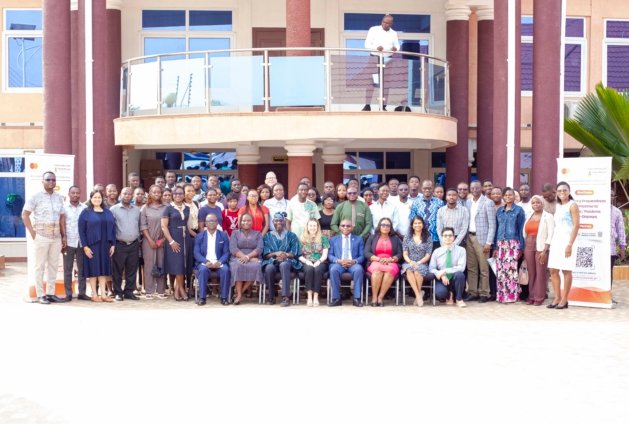


Africa Health Collaborative KNUST Concludes Successful Emergency Preparedness Workshop
The Africa Health Collaborative at Kwame Nkrumah University of Science and Technology (KNUST) has successfully concluded its 3rd annual emergency preparedness workshop, focusing on Community Emergency Care (CEC) and Emergency Preparedness (EMPRESS) short courses. The three-day event brought together healthcare professionals from various regions to enhance their skills in emergency response and pandemic preparedness.
Collaborative Efforts in Emergency Care
Dr. Kimberly de Souza from the University of Toronto praised the active participation and curiosity demonstrated by attendees. She highlighted the collaborative efforts between Canadian and Ghanaian facilitators, emphasizing the importance of shared experiences in strengthening emergency care practices.
“The course thrives on your participation, so stay curious and actively involved. We’ve been co-facilitating and collaborating with our Ghanaian colleagues, so let’s learn from each other and draw from our shared experiences to strengthen our practices in emergency preparedness and response,” she said.
Equipping Participants for Effective Response
The co-created course aimed to equip participants with the requisite skills to respond effectively to emergencies and pandemics. Professor Peter Agyei-Baffour, Dean of the School of Public Health (SPH) at KNUST, underscored the essence of continuous lifelong learning and the need to acquire skills to make a difference.
“I believe the next few days will offer you exceptional opportunities to expand beyond knowledge. Network with your colleague primary healthcare workers from all other regions. Engage with expert facilitators who are very passionate about their courses,” he said.
Global Access to High-Quality Emergency Care
Dr. Donald Melady, an Associate Professor of Emergency Medicine at the University of Toronto, Canada, reaffirmed the mission of the International Federation for Emergency Medicine (IFEM), which is to ensure that everyone globally has access to high-quality emergency care.
“You are striving toward fulfilling that mission, and we are here to support you. We will keep ensuring that every person in Ghana has access to high-quality emergency care,” he said.
Emphasizing Community-Based Emergency Care
Provost of the College of Health Science at KNUST, Professor Christian Agyare, emphasized that Ghana, like many developing countries, has made significant strides in healthcare over the years, but emergency care and pandemic preparedness at the community level remain a pressing concern.
“Emergency care plays a vital role in saving lives, promoting well-being, and maintaining the health of our communities. The concept of community-based emergency care is critical because it emphasizes the importance of prompt and efficient healthcare at the local level,” he said.
Building Capacity for a Healthier Ghana
Prof. Agyare believes that with a shared vision, Ghana’s healthcare system can be healthier, more resilient, and better prepared to face emergencies.
“CEC and EMPRESS are not just healthcare issues; they are societal issues that touch the lives of every Ghanaian. It requires a collective effort, commitment, and willingness to address disparities in access to care,” he said.
Dr. Fred Adomako Boateng, the Ashanti Regional Director of the Ghana Health Service, urged participants to network and engage fully in the course.
“Make the most of this unique opportunity to learn from experts who have come from all over. Engage with everything happening during this period and absorb as much as you can before they leave. When asked to reflect on this experience, you should be able to do so confidently,” he said.
The Importance of Preparedness
Dr. Kofi Akohene Mensah, the lead of the Health Employment Pillar, expressed his gratitude to the team from the University of Toronto, the team from Ghana, and the staff from the Health Collaborative. He also highlighted the indiscriminate nature of pandemics, emphasizing the importance of preparing health facilities to effectively respond to emergency healthcare situations.
“We urge you to take the knowledge you’ve gained and apply it in your communities. At the facility level, work as a team, advocate for resources, and make a meaningful impact,” he said.http://knustnoticeboard.info