


ALBATROSS Workshop in Kumasi Advances Co-Created Climate Services for Urban Resilience
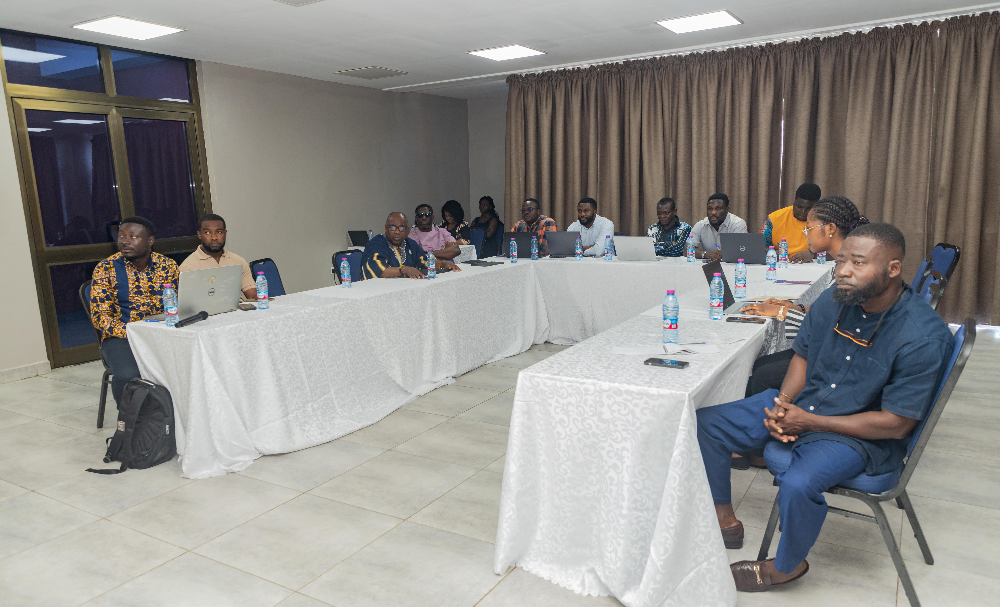
Scientists, government agencies, and community stakeholders convened in Kumasi from July 14 to 15 for the ALBATROSS Climate Services Workshop, aimed at strengthening urban resilience in Ghana through co-created, actionable climate services.
Held under the theme “Co-Creating Actionable Climate Services for Urban Resilience,” the two-day workshop brought together a diverse group of actors to explore the integration of climate science, local knowledge, and policy instruments in tackling climate-related urban challenges such as flooding, heatwaves, and food insecurity.
The event forms a critical part of the EU-funded ALBATROSS project, which seeks to develop next-generation climate services across Africa and Europe. The Kumasi Hub has been instrumental in leading efforts around citizen engagement, integrated data systems, and interdisciplinary research to support resilient urban development.
Urgent Call for Localised Climate Action
Prof. Michael Poku-Boansi, Principal Investigator for the ALBATROSS project in Ghana, emphasized the growing vulnerability of Kumasi to climate hazards, especially flooding. He advocated for early warning systems and nature-based solutions as vital tools for resilience. Prof. Poku-Boansi also called for inclusive, locally informed strategies aligned with the United Nations Sustainable Development Goals (SDGs).
Prof. Leonard Amekudzi, the coordinator of the Kumasi Hub and leader of Work Package 2 of the project, discussed the application of socio-economic and environmental modeling to support informed climate adaptation strategies. He underscored the importance of bridging scientific insight with practical decision-making.
Insights from National Agencies
Key national institutions—namely the Ghana Meteorological Agency (GMET), the Ghana Hydrological Authority, and the National Disaster Management Organisation (NADMO)—provided data inputs and insights that shaped workshop discussions.
GMET presented rising trends in temperature and erratic rainfall patterns, while highlighting their operational climate services including daily forecasts, seasonal predictions, and the Climate Atlas. The agency noted the need to improve community trust and incorporate indigenous observations into its services.
The Ghana Hydrological Authority showcased its forecasting systems—FANFAR, FUSE, and Voltalarm that rely on digital elevation and real-time telemetry data. However, it was revealed that Kumasi lacks adequate hydrological monitoring infrastructure, weakening its early warning capabilities.
NADMO discussed its disaster risk reduction strategy, which blends physical flood defenses with community outreach and education. Yet, it highlighted persistent coordination challenges, weak land-use enforcement, and political interference as major setbacks to effective climate planning.
Tools for the Future
The workshop also provided updates from Work Package 5 on hybrid climate tools currently under development. These include high-resolution forecasting models and AI-enhanced planning platforms, designed with end-user participation in mind. The tools aim to enhance adoption by integrating training and participatory validation.
On Day Two, Saša Vranić presented the ALBATROSS citizen science toolkit—an offline-compatible platform that allows users to map hazards, report local data, and contribute to broader modeling systems. The session demonstrated the potential of grassroots involvement in climate services.
GMET led a practical session on early warning systems, introducing ensemble models, satellite data inputs, and platforms such as WIS and CAPS. The agency emphasized youth-led climate clubs as vital conduits for community engagement.
Hydro reiterated Kumasi’s coverage gaps in hydrological telemetry and proposed replicating Accra’s systems. NADMO presented its Unified Operations Centre but cited fragmented access to climate data as a key barrier to coordinated response and planning.
Towards a Resilient Kumasi
Participants identified systemic issues including weak institutional collaboration, limited data-sharing, and low public uptake of climate forecasts. Recommendations included the creation of centralized platforms, stronger legal enforcement, and active engagement of youth and citizen scientists.
In the final session, reflections centered on building a sustainable climate services ecosystem in Kumasi. Calls were made for policy continuity, integrated land-use enforcement, and institutional incentives to retain local expertise.
Prof. Poku-Boansi closed the workshop with a firm call to move beyond political cycles and build inclusive, evidence-driven climate systems. He expressed gratitude to all participants and reaffirmed the Kumasi Hub’s commitment to advancing urban resilience through people-centered solutions.
The ALBATROSS project continues to play a pivotal role in shaping the future of climate adaptation and resilience in urban Ghana and beyond.