
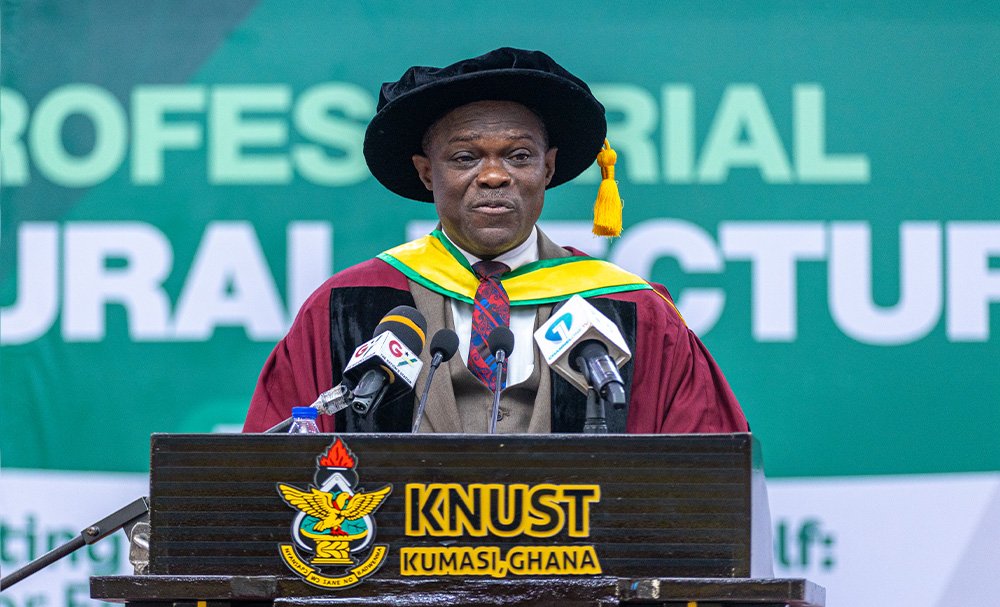


Prof. Amos-Abanyie Calls for Urgent Redesign of Ghana’s Classrooms to Improve Student Health and Performance.
A leading architecture scholar at the Kwame Nkrumah University of Science and Technology (KNUST), Prof. Samuel Amos-Abanyie, has raised concerns about the quality of learning environments in Ghanaian schools, warning that poor classroom conditions may be silently affecting students’ health, focus, and academic achievement.
Speaking during his inaugural lecture titled “Protecting Humanity from Itself: Indoor Environmental Quality in an Era of Climate Stress,” he emphasized that many educational spaces in Ghana do not meet the basic environmental standards needed for effective teaching and learning.
Learning Environments Under Pressure
Prof. Amos-Abanyie identified several environmental challenges affecting classrooms, including:
- Excessive heat
- Poor ventilation
- Inadequate natural lighting
- High noise levels
According to him, these conditions are often the result of rapid urban expansion, unregulated building modifications, and weak architectural planning.
He noted that students are frequently expected to concentrate and perform academically in spaces that are not conducive to learning.
Noise and Cognitive Disruption
A key concern raised was the impact of noise pollution, particularly in schools located near highways and commercial areas.
He explained that in some cases, noise levels around educational institutions exceed recommended standards by 30% to over 100%, which significantly disrupts teaching and cognitive development.
Prof. Amos-Abanyie stressed that urban communities have gradually normalised chronic noise, warning that city planning must begin prioritising human wellbeing alongside functionality.
Poor Lighting and Its Hidden Effects
The professor also highlighted poor daylighting as a major issue in school infrastructure.
He explained that unplanned building extensions often reduce window space, limiting the amount of natural light entering classrooms.
This, he noted, increases reliance on artificial lighting and contributes to:
- Fatigue and stress
- Reduced concentration
- Lower academic performance
He cautioned that what is commonly accepted as “normal” classroom lighting conditions may actually be harmful.
Heat, Ventilation, and Energy Strain
Rising indoor temperatures and poor airflow were also identified as growing concerns. According to him, many schools now rely heavily on artificial cooling systems, which increases energy consumption and places additional pressure on the national electricity supply.
He stressed that these challenges are not unavoidable but stem from avoidable design and planning decisions.
Call for Policy and Design Reform
Prof. Amos-Abanyie urged policymakers, developers, and school authorities to incorporate indoor environmental quality standards into the design and renovation of educational facilities.
He emphasized the importance of:
- Proper ventilation systems
- Adequate daylight access
- Effective noise control measures
He also encouraged students to be mindful of their learning environments, advising them to choose well-ventilated and well-lit study spaces whenever possible.
“Healthy Buildings Are a Necessity”
Concluding his lecture, he called for a shift in how buildings are designed and perceived.
“Healthy buildings are not luxuries; they are necessities. If we fail to act, we risk normalising environments that quietly undermine human potential,” he stated.

University Leadership Response
The Vice-Chancellor of KNUST, Prof. Rita Akosua Dickson, commended the lecture, describing indoor environmental quality as a critical issue in modern education and urban development.
She noted that:
“Indoor environmental quality is not just a design aspiration but a moral necessity in protecting humanity from unplanned consequences.”
Summary
The lecture underscored a growing concern in Ghana’s education system: that learning outcomes are not only shaped by curriculum and teaching quality, but also by the physical environments in which students learn.
Author: Aboagye Yaw Ankomah