
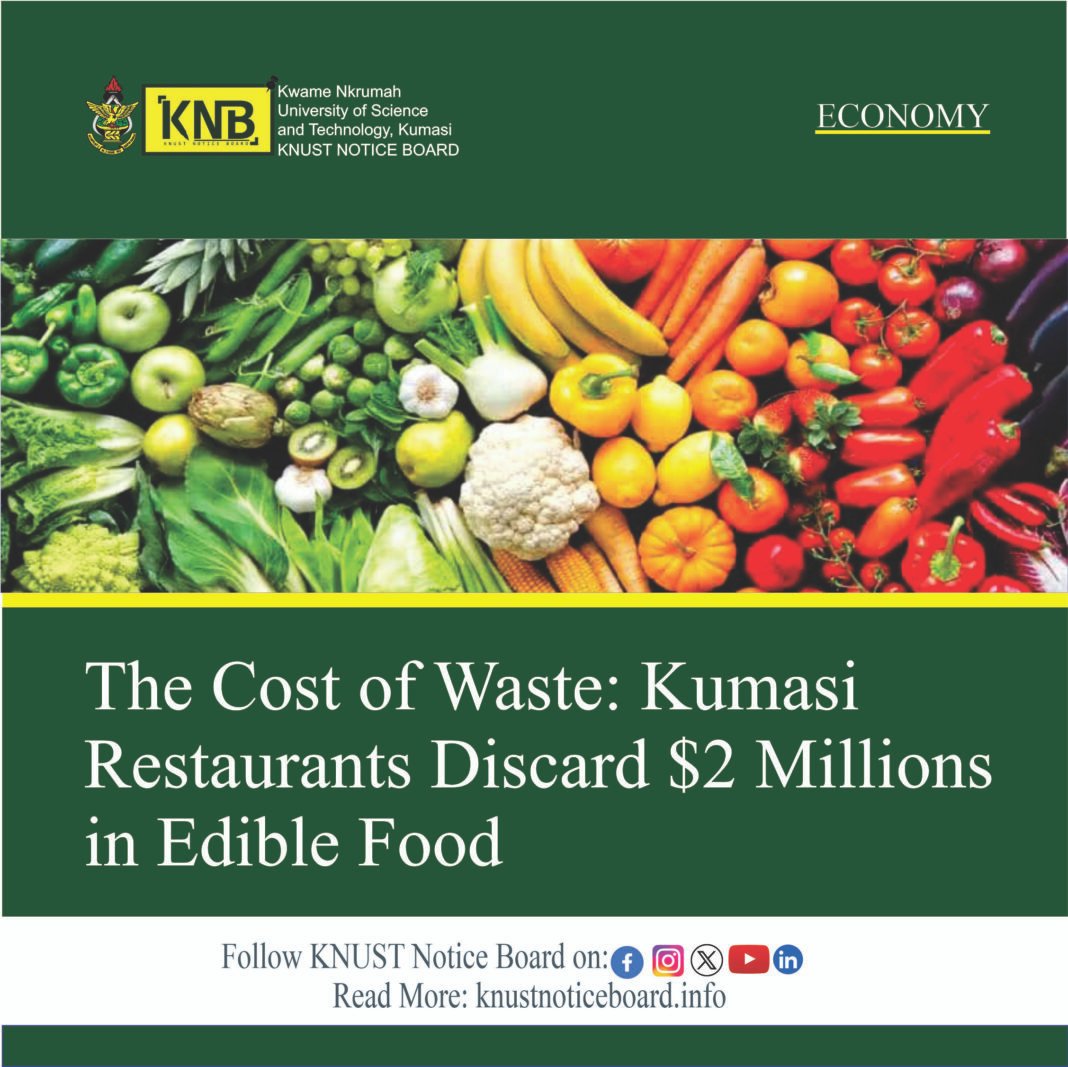


The Alarming Reality of Food Waste in Kumasi: A Study Reveals the Extent of the Problem
A recent study conducted by the Department of Agricultural Economics, Agribusiness, and Extension at the Kwame Nkrumah University of Science and Technology (KNUST) College of Agriculture and Natural Resources (CANR) has shed light on the alarming issue of food waste in Kumasi. According to the study, restaurants in the city waste a staggering 320 metric tons of edible food every year, valued at over US$2 million.
The Study’s Findings
The study, which focused on the food waste management practices of restaurants in Kumasi, revealed that the main methods of managing food waste include disposal, source reduction, and reuse. Notably, some restaurants donate their excess food to livestock producers for use in animal feed production. However, despite these efforts, the sheer volume of edible food being wasted is a cause for concern.
The Implications of Food Waste
Food waste has significant economic, environmental, and social implications. The financial loss of over US$2 million per year is a substantial blow to the restaurant industry, while the environmental impact of food waste contributes to greenhouse gas emissions and climate change. Furthermore, the social implications of food waste are evident in the fact that many individuals in Kumasi struggle to access nutritious food, while edible food is being discarded.
Addressing the Issue
The study’s findings highlight the need for a more sustainable approach to food waste management in Kumasi. By adopting more effective food waste reduction and management strategies, restaurants can reduce their environmental footprint, save money, and contribute to a more food-secure community.
A Call to Action
The study’s results serve as a call to action for restaurants, policymakers, and individuals to work together to address the issue of food waste in Kumasi. By implementing sustainable food waste management practices, we can reduce the economic, environmental, and social impacts of food waste and create a more sustainable food system for the future.