
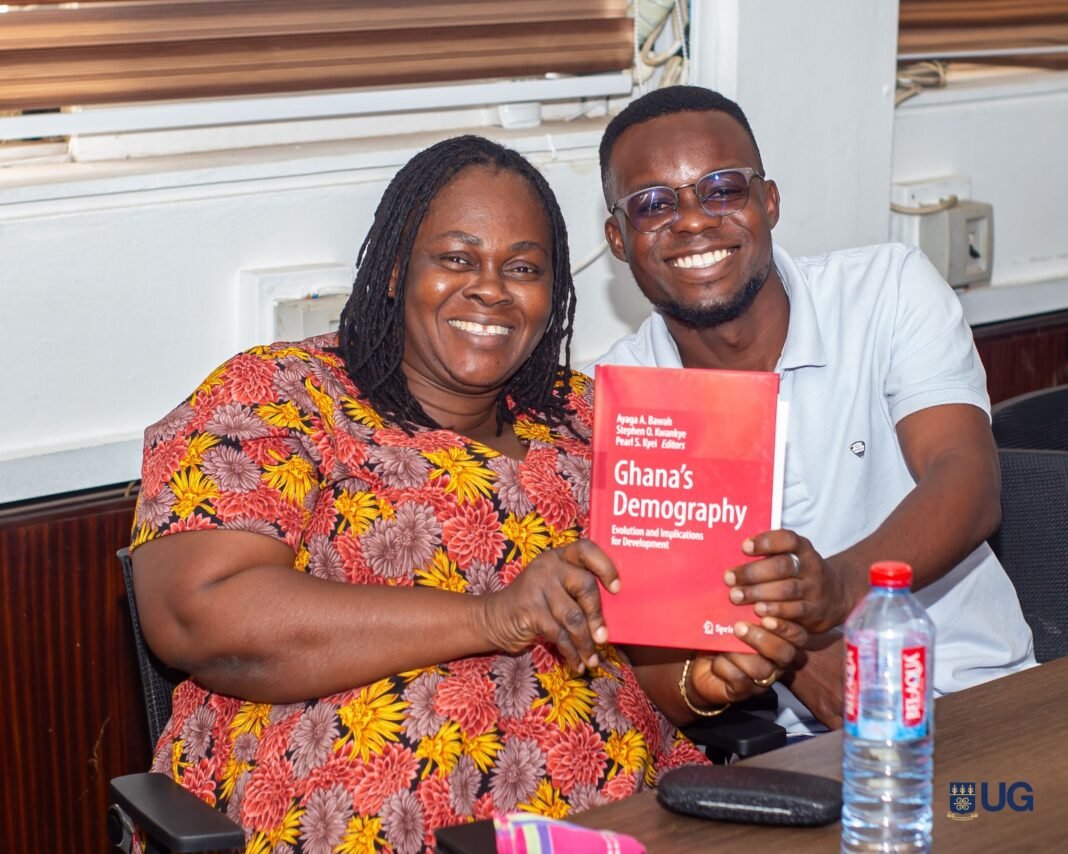


RIPS Launches landmark Book on Ghana’s Demographic Transformation and Development.
The University of Ghana, through its Regional Institute for Population Studies(RIPS), has officially launched a groundbreaking new publication titled Ghana’s Demography: Evolutions and Implications of Development. The book offers a comprehensive exploration of Ghana’s population dynamics and their implications for national development.
Published by Springer, the volume brings together decades of rigorous interdisciplinary research, examining demographic changes in relation to critical sectors such as health, education, ageing, poverty, and environmental sustainability.
A Platform for Policy Dialouge
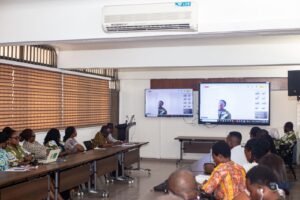
The launch event, held in a hybrid format, attracted a diverse audience including academics, government officials, civil society actors and international partners. Beyond the unveiling of the book, the gathering serverd as a plattform for meaningful policy dialouge, alingning discussions with global frmeworks like the United Nations Sustainable Development Goals and the African union Agenda 2063.
In his welcome adress, the Director of RIPS, Prof. Mumuni Abu ,emphasised the practical purpose of the publication. He described the launch as a more than a ceremonial event, noting that it is intended to drive action and bridge the gap between research and policymaking. He further explained that the book was concieved as part of RIPS’ 50th aniversary celebrations highlighting, the institute’s enduring relevance in shaping development through evidence-based research.

Prof Mumni Abu
Insights on Population and Development
The event was chaired by Dr. Nii Moi Thompson, Chairman of the National Development Planning Commission (NDPC). In his remarks, he described the publication as timely and essential, stressing that it goes beyond academic discourse to address real-world development challenges. Dr. Thompson underscored the importance of understanding the interplay between fertility, mortality, migration, and economic transformation. He noted that effective development planning requires demographic foresight, famously stating that planning without it is “like planning in the dark.”
Drawing on global data, he highlighted significant trends, including declining fertility rates and increasing life expectancy across sub-Saharan Africa. He commended the book for equipping policymakers with reliable data sourced from censuses, surveys, and geospatial analysis.
Key Findings from the Book
A presentation during the launch outlined several critical findings from the book. Ghana’s population has grown approximately 4.6 times over the past six decades. While fertility rates have declined—largely due to improvements in women’s education—new challenges have emerged.
These include a rise in non-communicable diseases among young people, high levels of vulnerable employment, and rapid urbanisation that is not matched by adequate infrastructure. The book also highlights regional disparities, such as higher child populations in northern Ghana and differences in disability prevalence between rural and urban areas.
Reflections from Contributors
Former Acting Director of RIPS, Prof. Stephen Kwakye, noted that the book seeks to trace Ghana’s demographic evolution while drawing lessons for the future. He emphasised the importance of using diverse and reliable data sources to inform both academic inquiry and policy decisions.
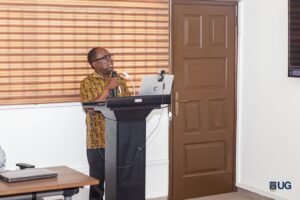
Similarly, Dr. Grace Bediako highlighted the book’s policy relevance, particularly in challenging traditional demographic theories. She pointed out that Ghana’s fertility decline has occurred without full industrialisation, driven instead by increased access to female education and reproductive health services.Dr. Bediako urged policymakers to invest in education, skills development, and job creation to harness the country’s youthful population as a demographic dividend rather than a potential liability.
Academic and Institutional Endorsement
Delivering remarks virtually, Prof. Joseph Yaro praised the publication as both a scholarly achievement and a strategic resource for students, lecturers, and planners. He encouraged critical engagement with the text and cautioned against over-reliance on artificial intelligence, urging readers to translate knowledge into actionable outcomes.
A representative from the Ghana Statistical Service, Godwin Gyebi, also commended RIPS, describing the book as a “compass for policy and practice” that strengthens collaboration toward equitable development.
Driving Research for Impact
Copies of the book are available through Springer, Amazon, and at RIPS, with additional dissemination materials accessible via the institute’s website. Plans are also underway to host further seminars to deepen engagement with the book’s findings.
The launch reinforces the University of Ghana’s commitment to producing impactful research that informs policy and contributes to both national and continental development.