


MSc Health Entrepreneurship Students Bridge Theory and Practice Through Field Trip
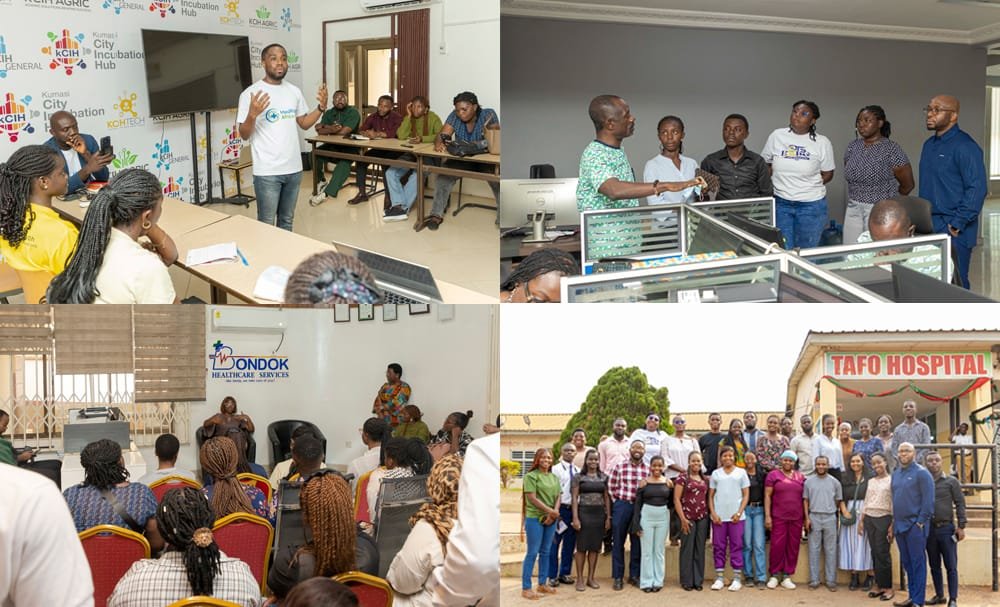
Students enrolled in the MSc Health Entrepreneurship programme at the Kwame Nkrumah University of Science and Technology (KNUST), led by the Africa Health Collaborative, have completed a two-day field trip designed to connect classroom learning with real-world practice within Ghana’s health ecosystem.
The field exercise, held from January 26 to 27, 2026, formed part of the practical component of the Health Ecosystem course. It was structured as a contextual enquiry to provide students with hands-on exposure to health systems, service delivery models, and innovation pathways across the public and private sectors.
As part of the visit, students toured a range of health institutions, including Tafo Government Hospital, the National Health Insurance Authority (NHIA) Claims Office, MedRoam Africa, and Bondock Health Services. These engagements offered practical insights into healthcare delivery, financing mechanisms, digital health innovation, and patient-centred care, while highlighting challenges and entrepreneurial opportunities within the sector.
Reflecting on the experience, Ruth Doe, a student on the programme, noted that the trip significantly reshaped her understanding of health entrepreneurship. She explained that the exposure to different facilities sparked immediate ideas and revealed diverse opportunities for innovation.
“At every facility we visited, I saw new possibilities. The field trip opened my eyes to how quickly ideas can emerge when theory meets practice,” she said.
At Bondock Health Services, students observed a care model that supports patients with severe cancers in a home-like environment. According to Doe, the visit demonstrated that healthcare entrepreneurship extends beyond pharmaceuticals and medical equipment.
“The Bondock model showed that healthcare can integrate nutrition and catering services. There are strong opportunities for partnerships with health- and FDA-compliant food entrepreneurs, especially for patients who require specialised diets,” she added.
Another participant, Elizabeth Adwoa Gyanwah Karikari, a nurse enrolled in the programme, said the trip transformed her perception of government institutions. She described the NHIA visit as particularly impactful, offering valuable insight into how governance and public-sector partnerships can support health innovation.
“I now see government institutions not as barriers, but as essential partners. Once trust and accreditation are achieved, innovations can scale and reach more people,” she said.
She further noted that the experience strengthened her critical thinking and understanding of accreditation processes, partnership building, and resilience in innovation.
“As a nurse developing skills in health innovation, I can now clearly identify gaps that require action. I’ve learned the importance of putting ideas to work and remaining persistent,” she added.
The MSc Health Entrepreneurship programme continues to prioritise experiential learning alongside classroom instruction. Through initiatives such as field trips, the programme equips students with practical knowledge of Ghana’s health ecosystem and prepares them to develop sustainable, user-centred solutions that address pressing societal needs.
By: Aboagye Yaw Ankomah