
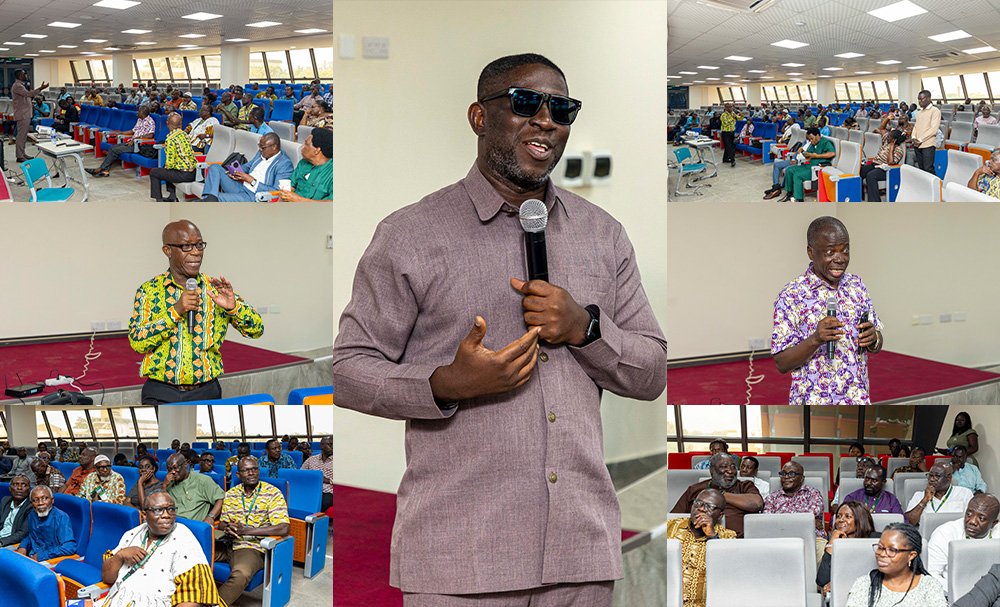


KNUST Enhances Quality Assurance in Graduate Thesis Examinations.
The Kwame Nkrumah University of Science and Technology (KNUST), Kumasi, has taken steps to further strengthen academic standards in graduate education through a workshop focused on improving thesis oral examination processes.
The workshop, organised by the School of Graduate Studies, brought together examiners and key stakeholders to review existing procedures, share experiences, and reinforce best practices in graduate assessment. The engagement highlighted the University’s commitment to fairness, transparency, and integrity in the evaluation of postgraduate research.
Speaking at the session, Prof. Robert Clement Abaidoo emphasised the critical role examiners play in upholding academic standards. He noted that the responsibility of examiners extends beyond grading to guiding and supporting students while ensuring that every candidate is given a fair opportunity to demonstrate their knowledge and research competence.
“Our responsibility goes beyond evaluation,” Prof. Abaidoo stated. “We must guide and support students and ensure each has a fair opportunity to demonstrate knowledge. This is a commitment to integrity and excellence, and to safeguarding the University’s credibility.”
Discussions led by Prof. Abaidoo addressed key issues such as conflicts of interest and the importance of providing timely, consistent, and unbiased feedback. He urged panel chairs to strictly adhere to their roles and ensure that the examination process clearly reflects that candidates have earned their degrees.
Adding to the discourse, Prof. Nicholas Kyei Baffour of the Department of Agricultural and Biosystems Engineering called on examination panels to uphold neutrality, confidentiality, and fairness throughout the oral examination process. He advised panel chairs to act as impartial moderators rather than examiners.
The Director of the School of Graduate Studies, Prof. Michael Poku Boansi, announced plans to introduce a centralised system for registering all examiners. Under the new arrangement, panel chairs will receive automated email notifications once they are assigned, a move expected to improve coordination and accountability.
Participants at the workshop also shared practical challenges encountered during thesis examinations, including supervision gaps, subjective assessments, and difficulties in evaluating complex and interdisciplinary research topics. These discussions informed proposed measures aimed at improving consistency and fairness across all graduate programmes.
The workshop concluded with a consensus that clear guidelines, effective communication, and collaboration among examiners are essential to preventing bias and maintaining trust in KNUST’s graduate examination processes.
By: Aboagye Yaw Ankomah